|
Stefan Annerel Page 1 | 2 | 3 | 4 | 5 | Biography | Information & News |
||||
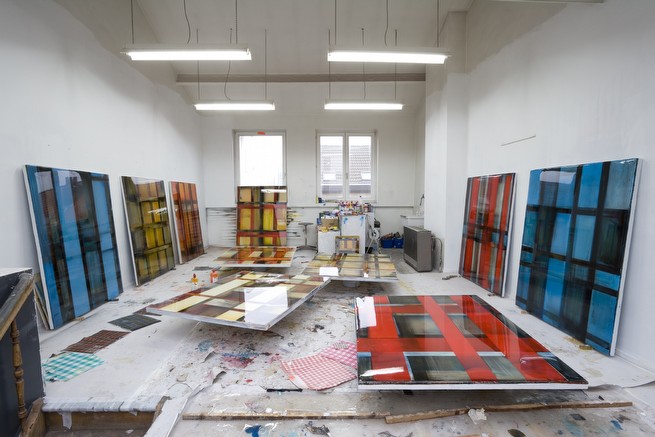
Studio Antwerp 2012
|
||||
|
The concept of memory is essential to our everyday visual praxis: it is what enables us to recognise and to compare�to know things (or to think so). Unaccessed memories remain indistinct and formless until we evoke them in our mind and recompose the bits and pieces taken from reality of which they are made: our mental focus brings them from a status of abstract entities to one of clearly demarcated figurative realities |
||||
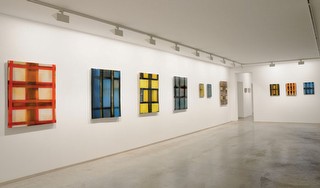
Kusseneers Gallery 2011
A forgotten name or a word will never come back to our mind by trying to remember it too hard. Only by wilfully forgetting the word or name (as it were, a second time), is it possible to retrieve it from our memory. It is, conversely, possible to focus so hard on something, that you no longer know what you are focussing on: that the image in your mind does not become clearer but blurs. You can concentrate so hard on a particular thought, that you loose the thought, that it detaches itself from you. Blurriness, therefore, is not necessarily the contrary of clarity: it can also be an extension of clarity�a clarity so consistently and radically sought after, that it evaporates. There exists a focus, in other words, either visual or mental, that is too intense to see what is usually seen. This is the focus in Annerel�s work; this is the mechanism of his memory |
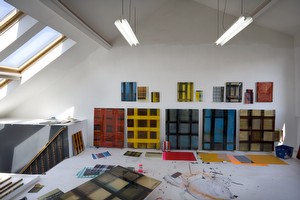
The viewer�s hesitating identification of the fragments of reality in Annerel�s works constitutes only the first stage in an elaborate game of cognition and recognition. The stakes in this game are higher. They concern the very relationship between image and reality�the heart of artistic practice: the illusion that makes fiction and reality merge seamlessly. There are, however, two types of illusions. Firstly, there is the illusion that relates to reality: the trompe l��il, which makes it possible for a work of art (say, a painting) to claim to be real rather than artificial. This is the illusion that deceives the eye and tricks it in seeing the depicted reality rather than the work of art, in seeing a landscape painting as a landscape and not as pigments on canvas, or seeing an idea formulated in abstract forms as the idea itself and not its visual expression.
Studio Antwerp, 2011 |
|||
|
||||
re-title.com
International contemporary art
SIGN UP FOR NEWSLETTERS

 SIGN UP for ARTIST MEMBERSHIP
SIGN UP for GALLERY MEMBERSHIP
SIGN UP for ARTIST MEMBERSHIP
SIGN UP for GALLERY MEMBERSHIP
Click on the map to search the directory