|
Barbara Weiss: Mary Heilmann - Home Sweet Home | John Miller - The Totality of All Things as They Actually Exist - 1 May 2010 to 5 June 2010 Current Exhibition |
||||
|
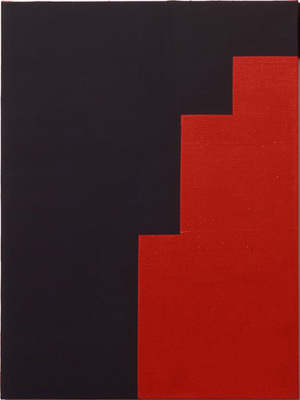
Mary Heilmann, Red Kachina, 1980
|
|||
|
||||
|
||||
|
(please scroll down for the English version) Mary Heilmann Home Sweet Home 01. Mai � 05. Juni 2010 Er�ffnung Freitag, 30. April, 16 � 21 Uhr �ffnungszeiten Di � Sa, 11 � 18 Uhr Gallery Weekend 1. und 2. Mai, 10 � 19 Uhr Die Galerie Barbara Weiss freut sich, ihre erste Einzelausstellung mit der international bekannten amerikanischen K�nstlerin Mary Heilmann (* 1940) ank�ndigen zu k�nnen. Die Ausstellung mit dem Titel Home Sweet Home pr�sentiert �ber 20 Exponate aus den letzten 40 Jahren und umfasst Gem�lde, Skulpturen, Fotografien und Druckgrafiken der K�nstlerin. Mary Heilmann, die sich seit vielen Jahren in einem dichten Netzwerk von Kunst- und KulturproduzentInnen bewegt, gilt in den USA heute als wichtigste nicht-gegenst�ndliche Malerin ihrer Generation. Als Artist�s Artist kennzeichnet sie eine signifikante k�nstlerische Position, die f�r das j�ngste Wiederaufleben malerischer Tendenzen von gro�er Bedeutung ist. Angelehnt an das Formenvokabular der geometrischen Moderne und Farbfeldmalerei, verbindet sie in ihren Werken nicht nur ungegenst�ndliche Elemente mit Codes von Popkultur und Kunsthandwerk. Sie kombiniert auch Abstraktes mit Konkretem. Pers�nlich Wahrgenommenes und Erlebtes � Nuancen von Farben, Kl�ngen, menschlichen Begegnungen und Orten � flie�en in ihre dichten, farbig satten Bildkompositionen ein. So zeugen viele Werke gerade in ihrer Farbigkeit oder Betitelung von Heilmanns Kindheit und Jugend an den kalifornischen Str�nden und in den Beatnik-Clubs der Bay Area. Auf formaler Ebene verweisen leichte Verzerrungen der zugrunde liegenden geometrischen Formen, Farbspritzer im Bild und ein klar erkennbarer Pinselstrich auf eine k�nstlerische Haltung, die sich mittels des Einsatzes subjektiv aufgeladener Gesten vom strengen Kanon der geometrischen Abstraktion verabschiedet hat. Wie die Ausstellung Home Sweet Home zeigt, beschr�nkt sich das �uvre von Mary Heilmann nicht allein auf Malerei und Grafik, sondern es umfasst auch M�belobjekte und Keramikskulpturen. Die in den Ausstellungsraum gestellten, leuchtend farbigen Holzst�hle (Clubchair, 2009), ein pink-orange bemalter Holztisch (Pink Table, 2010), sowie diverse farbig glasierte Keramikskulpturen, unter anderem in Form eines Sitzm�bels (Red Chair, 1982) oder mit motivischer N�he zu einem Kaffeeservice und poppiger Innenraumdekoration (u.a. The Black Hand, 1983), verwandeln das neutrale Ambiente der Galerie in einen mit Energie und Leben erf�llten Ort. Alle Elemente, selbst die Gem�lde (u.a. Chair, 1987), Grafiken (u.a. Franz West II, 1997) und das Fotodyptichon Magic Chair - Floating Table, 1967-72 verschmelzen zu einem Interieur, das Aspekte von Kunst, Leben und Arbeit zu einem sensiblen Netz verwebt. Home Sweet Home. This sentimental song title is appropriate for this show, because it is something I heard when I was little. I remember back then I would be around looking at the things in the room and mentally moving them around and using chairs, tables, plates cups and saucers... pictures on the wall to help me daydream. [...] When I am in my studio now (and my studio is my home) I can daydream in the same way... (Mary Heilmann, zitiert nach ihrem Text zur Ausstellung) Die K�nstlerin wird w�hrend der Ausstellungser�ffnung anwesend sein. John Miller The Totality of All Things as They Actually Exist 01. Mai � 05. Juni 2010 Die Gesamtheit aller Dinge wie sie wirklich existieren (The Reality of All Things As They Actually Exist) � es ist eine �u�erst ausladende Definition von Realit�t, mit der der amerikanische K�nstler John Miller (*1954) seine inzwischen bereits 6. Einzelausstellung in der Galerie Barbara Weiss betitelt. Betrachtet man die neuen Gem�lde John Millers, sieht man sich mit Bildern von Menschen in ganz unterschiedlichen r�umlichen Szenarien konfrontiert, deren Gesichter einen spontanen Gef�hlsausbruch zeigen. Schrecken und Trauer zeichnen ihre Mimik; vermutlich, so k�nnte man meinen, haben sie gerade eine schlechte Nachricht erhalten. Erf�hrt man jedoch, dass die Motive der von Standbildern aus dem Internet auf Leinw�nde �bertragenen Bilder auf Szenen aus Reality-TV-Shows zur�ckgehen, entsteht unweigerlich die Frage nach der Authentizit�t der dargestellten Emotionen. Denn das, was uns heute im Fernsehen als �Reality� verkauft wird, ist zunehmend ein von Filmproduzenten inszeniertes Konstrukt, das auf der Annahme basiert, Realit�t �hnele der Struktur nach einem Spiel und w�re damit � genauso wie die Handlungen der DarstellerInnen � anhand der Regeln der sog. Spieltheorie* zu berechnen und steuern. Erinnert man sich an die Game-Show-Paintings von John Miller, die er 1999 in der Galerie zeigte, erscheint die neue Werkserie wie eine logische Folge seiner anhaltenden Beobachtung von Realit�t und Realit�tsverlust. Einen stark gegenl�ufigen, an Gesten von Konzeptkunst erinnernden, Akzent setzt John Miller mit den in die Ausstellung gestellten Aktenschr�nken auf Holzsockeln, in denen sich Mappen mit unbenutztem Druckerpapier befinden, sowie mit unbeschriftet gerahmten Schreibpapieren. Eine Atmosph�re des b�rokratischen Speicherns von Daten, von Systematisierung und �berwachung wird aufgerufen. Doch die Tatsache, dass alle Bl�tter ohne sichtbaren und damit nachvollziehbar werdenden Inhalt bleiben, versinnbildlicht, dass das, was ohne zeichenhaften Ausdruck, was (psychologisch) unterdr�ckt bleibt, nicht von Au�en kontrollierbar ist. Und in diesem Faktum k�nnte man durchaus eine Herausforderung an den m�chtegern-Empirismus des heutigen Reality-TVs sehen, wie es John Miller formuliert. Erg�nzend laufen drei Musikclips der virtuellen Band Robot (John Miller und Takuji Kogo). Die repetitiven Songtexte � I�m.../I like.../I think... � zum elektronisch generierten Instrumentalsound �bernehmen Miller und Kogo aus Bekanntschaftsanzeigen, womit auch hier ein Genre ins Spiel kommt, in dem das dargestellte Image nur selten mit der Realit�t �bereinstimmt, sondern vielmehr seine eigene Realit�t erzeugt. Das Bildmaterial der Clips geht auf die Zusammenarbeit mit K�nstlerInnen wie Aura Rosenberg und Nic Cuagnini zur�ck. * Die Spieltheorie ist ein Teilgebiet der Mathematik und befasst sich damit, Systeme mit mehreren Akteuren zu modellieren. Dabei versucht sie auch, das rationale Entscheidungsverhalten in sozialen Konfliktsituationen abzuleiten. Der K�nstler wird w�hrend der Ausstellungser�ffnung anwesend sein. Mary Heilmann Home Sweet Home May 1 � June 05, 2010 Opening Friday, April 30, 4 � 9 pm Gallery hours Tuesday � Saturday, 11 am � 6 pm Gallery Weekend May 1 and May 2, 10 am � 7 pm Galerie Barbara Weiss is pleased to announce the first solo exhibition by the internationally renowned American artist Mary Heilmann (born 1940). The show is entitled Home Sweet Home and presents over twenty works spanning the past forty years, including paintings, sculptures, photographs and prints. For many years Mary Heilmann has been active in a large network of art and culture producers, and in the USA she is seen as the most significant non-figurative painter of her generation. Heilmann is generally regarded as an �artist�s artist,� representing an important artistic position that is highly influential in recent revivals of painterly art. Her work refers to the formal idioms of geometrical modernism and color field painting, combining non-figurative and also figurative elements with the codes of pop culture and arts and crafts. She also links the abstract and the concrete. Things she has herself perceived and experienced - nuances of colors, sounds, human encounters, and places - flow into her dense and colorfully lush compositions. In many of her works Heilmann uses colors and titles that refer to her own childhood and youth on Californian beaches and the beatnik clubs of the Bay Area. On the formal level, slight distortions of the underlying geometrical shapes, sprays and drips of paint on the picture, and a clearly recognizable use of the brushstroke all stand for an artistic approach which utilizes subjective gestures and thus abandons the strict canon of geometrical abstraction. As Home Sweet Home shows, Mary Heilmann�s work is not limited to painting and prints, but also includes pieces of furniture and sculptures in ceramics. Heilmann transforms the normally neutral space of the gallery into a place that is vibrant with energy and life, using brightly colored wooden chairs (Clubchair, 2009), a wooden table painted in pink and orange (Pink Table, 2010), and various ceramic sculptures glazed in different colors, including one in the shape of a chair (Red Chair, 1982), and others that are reminiscent of a coffee set and interior decorations (e.g. The Black Hand, 1983). All of these objects, including the paintings (e.g. Chair, 1987), prints (e.g. Franz West II, 1997), and the photo diptych Magic Chair - Floating Table (1967-72), combine to form an interior that interweaves aspects of art, life, and work into a sensitive network. Home Sweet Home. This sentimental song title is appropriate for this show, because it is something I heard when I was little. I remember back then I would be around looking at the things in the room and mentally moving them around and using chairs, tables, plates cups and saucers ... pictures on the wall help me daydream. [...] When I am in my studio now (and my studio is my home) I can daydream in the same way ... (Mary Heilmann, from her text on this exhibition). Mary Heilmann will be attending the exhibition opening. John Miller The Totality of All Things as They Actually Exist May 1 � June 05, 2010 The Reality of All Things As They Actually Exist � this is a broad definition of reality which the American artist John Miller (born 1954) has chosen for his sixth solo exhibition at Galerie Barbara Weiss. In Miller�s new paintings, you see individuals depicted in various settings, all of whose faces show spontaneous emotion. They are in shock and sadness, reacting perhaps to bad news. Miller, however, took these images from reality - TV Shows, still images published on the Internet. This leads straight to the question of the authenticity of these emotions. What TV today sells us in the name of reality, is increasingly staged as a television producer�s commodity, based on the assumption that the structure of reality is like a game that can be calculated and controlled using the rules of game theory,* just as the actions of the protagonists of reality shows can be made to perform on demand for the cameras. Recalling the game show paintings Miller exhibited at Galerie Weiss in 1999, this new series of works offers an extended observation on reality and the loss of reality. Miller�s other works shown here contrast with the paintings. He has placed filing cabinets on wooden bases, inside of which are files with unused printing paper and framed sheets of writing paper without text. This conjures up an atmosphere of the bureaucratic storage of data, of systemization and control. But because all the sheets of paper are without visible and traceable content, they stand for the fact that whatever has no clear symbolic meaning, but remains (psychologically) repressed, cannot be controlled from the outside. This potential could well be seen as a challenge to the would-be empiricism of contemporary reality TV as John Miller sees it. The exhibition also includes three music clips by the virtual band Robot (John Miller and Takuji Kogo). These clips use electronically generated instrumental sound and repetitive song texts � I�m.../I like.../I think... � that Miller and Kogo have taken from personal ads. This too is a genre where the image presented rarely coincides with reality, as it creates its own reality instead. The pictorial material in these clips was created together with other artists such as Aura Rosenberg and Nic Cuagnini. * Game theory is a field in mathematics that posits models for systems with more than one agent. It attempts to predict rational decision-making processes in situations of social conflict. John Miller will be attending the exhibition opening. |
||||
re-title.com
International contemporary art
SIGN UP FOR NEWSLETTERS

 SIGN UP for ARTIST MEMBERSHIP
SIGN UP for GALLERY MEMBERSHIP
SIGN UP for ARTIST MEMBERSHIP
SIGN UP for GALLERY MEMBERSHIP
Click on the map to search the directory