|
Cristina Guerra: Filipa C�sar : The Four Chambered Heart - 21 Jan 2009 to 21 Feb 2009 Current Exhibition |
||||
|
|
|||
|
||||
|
||||
|
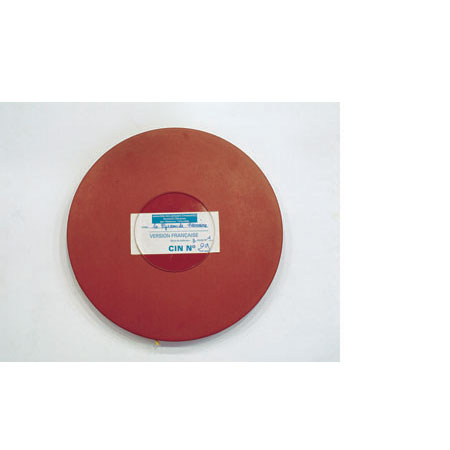
Filipa C�sar The Four Chambered Heart 21st January - 21st February 2009 Opening | Tuesday, 20th January at 10pm In the year of 1959 Jean Rouch directed the film The Human Pyramid. The film is, in Rouch�s own words, an �experience� in between fiction and documentary, where he sought to initiate a debate between two groups of students from the Ivory Cost (a group of white students and a group of black students). The film is, therefore an observation of the human behaviour, which for Rouch, as an ethnographer, is the key to in-depth thinking about political, social and racial issues. An anticipation of the Cin�ma V�rit�, this often forgotten film, was the starting point of Filipa C�sar (Porto, 1975) this last project: The Four Chambered Heart. When C�sar was invited in the end of 2007 to attend an artistic residency at the Israeli Center for Digital Art in Holon, she thought of a similar project but tailored to the local context. She put herself in Rouch�s place � the instigator who captures on film his characters� reactions and emotions while probing whether they are acting or not. Instead of a group of black and a group of white students, the artist brought together a group of Arab and a group of Hebrew students from three cinema schools in Israel: Almanar Film School, in Taibe; Telaviv University, Department of Film and Television, in Telaviv; and Sapir Academic College, Department of Film and TV, in Sederot. After watching the projection of the film, they start discussing their viewing experience. They question the role of cinema� the role of the director, and each other�s positions. They even deconstruct the cinematic device they are themselves part of, pointing out the differences between Rouch�s and C�sar�s experiment. Gradually, an argument about cinema shifts to a debate on Israel and Palestine, on colonialism and language, culminating in the subject of external intervention (in this case European intervention, personified in Filipa C�sar). The body of work Filipa C�sar has been producing has developed towards an investigation on the human nature and its visualization through the lens (hidden or not) of a camera. Such nature is surveyed in situations as diverse as the waiting hours spend at train stations (Berlin Zoo, 2001-2003), or as the narration of political resistance (Le Passeur, 2008). Above the discourse, which is verbalized, it is in the moments of silence that an increasing weight is to be found. This specificity is once more demonstrated in The Four Chambered Heart (spoken in Hebrew and subtitled in English). The recurring preference for the reaction shot as a character portrayal mechanism, fragments the statements, isolating each individual in his or her position. Filipa C�sars films increasingly propose a utopian vision of the role of cinema (and of art). One of the students states at a certain point that, �a film can not change the world�. By proposing projects such as this one, C�sar suggests that art can, nevertheless, have an active role in such discussion. |
||||
re-title.com
International contemporary art
SIGN UP FOR NEWSLETTERS

 SIGN UP for ARTIST MEMBERSHIP
SIGN UP for GALLERY MEMBERSHIP
SIGN UP for ARTIST MEMBERSHIP
SIGN UP for GALLERY MEMBERSHIP
Click on the map to search the directory