|
Galerie Francesca Pia: FANTASTIQUE ELASTIQUE - 26 Mar 2011 to 30 Apr 2011 Current Exhibition |
||||
|
|
|||
|
||||
|
||||
|
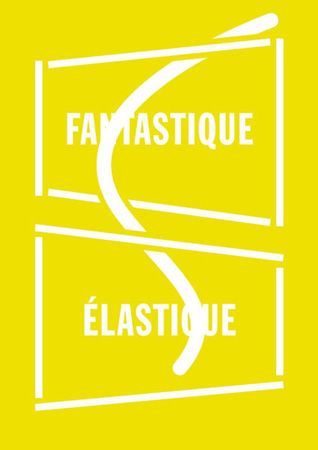
FANTASTIQUE ELASTIQUE 26 March 2011 - 30 April 2011 Opening: FRIDAY, MARCH 25, 6-8 PM with contributions by Zosia Kwasieborska, Stefan Marx, Olga Prader, Batia Suter, Anne K�thi Wehrli curated by Stefan Wagner (scroll down for english version) Das Format Zeichnung erf�hrt zurzeit eine grosse Aufmerksamkeit im Ausstellungsbetrieb. Das mag am Medium liegen, dass einerseits eine unmittelbare k�nstlerische Handschrift erkennen l�sst, anderseits scheint dieses die stets wieder an die Kunst herangetragenen Anspr�che an Authentizit�t zu erf�llen. Aus der k�nstlerischen Perspektive sind Zeichnungen oftmals g�nstige und einfache Produktionsmittel, die sich auch �ber Eigenverlage vertreiben lassen. Die Gruppenausstellung �fantastique �lastique" breitet eine spielerische Anlage aus, die das Format �Zeichnung" und dessen Ausdrucks- und Vertriebsm�glichkeiten sichtbar machen. Damit sollen Vorstellungen, die sich mit dem Medium verbinden thematisiert und eine Dehnbarkeit des Begriffs �Zeichnung" provoziert werden. Br�che innerhalb des Verst�ndnisses von dem, was als Zeichnung verstanden werden kann, geh�ren zur Ausstellungskonzeption. Das Themenspektrum der Zeichnungen reicht von spielerischen Affirmationen der �sthetik der Moderne, Einschreibungen in Landschaften, Formen des Portr�ts, Abdr�cken des menschlichen K�rpers sowie der Konstruktion von Geschlecht. Aufgrund der vielf�ltigen Inhalte und Ausdrucksweisen erscheint es sinnvoll, einen m�glichst offenen Ausstellungsbegriff zu formulieren. Dies wird im Ausstellungstitel angedeutet. �Fantastique" leitet sich etymologisch vom griechischen Phantasia ab, welches im Deutschen mit Vorstellung �bersetzt wird. Das franz�sische Wort ��lastique" wird mit �Elastizit�t" �bersetzt. Man kann damit die F�higkeit eines K�rpers bezeichnen, die Form unter Zwang zu ver�ndern, um anschliessend wieder in den urspr�nglichen Zustand zur�ckzufallen. �Fantastique �lastique" spielt folglich mit dehnbaren Vorstellungen von Form und Inhalt und provoziert ein geschlossenes System offener Bedeutungen, das im Gesamtzusammenhang der Ausstellung neue Leseweisen von Themen sowie dem Format Zeichnung erzeugt. Die in Warschau aufgewachsene und heute in Z�rich lebende Zosia Kwasieborska (1984*) arbeitet installativ und skulptural. Sie setzt sich in ihrer Arbeit mit der Beschaffenheit des menschlichen K�rpers und seiner Verletzlichkeit auseinander. Sie wird eine Wachs- und Audioinstallation anfertigen. Stefan Marx (1979*) lebt und arbeitet in Hamburg. Er zeichnete unz�hlige Portr�ts und Genre-Bilder auf Reisen und in Clubs, aber auch Malb�cher f�r Kinder. Die oftmals krakelig gezeichneten Figuren wirken zuweilen komisch und entr�ckt, sind aber immer mit einer sensiblen Hinwendung verfasst. Marx verlegt seine Zeichnungen seit Jahren im Zines-Format in Eigenregie sowie in Fremdverlagen. Anl�sslich seiner Ausstellung im Hamburger Kunstverein 2010 erschien sein neustes Buch bei Christoph Keller Editionen (JRP-Ringier). Olga Prader (1986*) lebt in Paris und Lausanne, wo sie zurzeit an der Kantonalen Hochschule f�r Kunst ECAL Graphic Design studiert. Prader experimentiert mit Zeichnungsformaten sowie deren Vervielf�ltigungstechniken. Sie wird in einer Bilderreihe, die sie in Kupfer stechen und drucken wird, eine Erz�hlung in Pablo Picassos Kupferstich�sthetik zeigen, deren Sinn bruchst�ckhaft und eher ikonisch als narrativ wirkt. 2009 erschien von ihr beim Nieves-Verlag ein aussergew�hnliches Zine aus Kupferstichdrucken. Batia Suter (1967*) wuchs in der Schweiz auf und lebt heute in Amsterdam. Seit einigen Jahren sammelt sie Bilder und kopiert diese, um sie im Ausstellungsraum wand- oder raumf�llend aufzukleben. In ihrer neusten Serie �Surfaces", das als Buch bei Roma Publications Amsterdam erscheinen wird, hat sie eine Sammlung von Fotografien angelegt, in denen die Landschaft durch Zeichnungen wie Strassen oder Gletscher gestaltet sind. Anne K�thi Wehrli (1978*) lebt in Z�rich, ist Zeichnerin und Herausgeberin von zahlreichen Zines. Diese verfasst sie abwechslungsweise alleine oder in Kollaboration, um sich damit unter anderem mit Queer-Themen zu befassen. Ihre Zeichnungen werden oftmals mit Texten und Gedichten versehen und wirken auf den ersten Blick zerbrechlich. F�r die Ausstellung wird sie Zeichnungen anfertigen sowie ein unlimitiertes Zine. ------------------------------------------------------------ The medium of drawing is currently receiving a lot of attention in the exhibition circuit. On the one hand, this can be attributed to the immediate, unique gesture that can be recognised in the art form and on the other hand it seems to fulfil the expectation of authenticity in art. From an artistic perspective, the material means for producing drawings are easily accessible, affordable and the finished product can be self-published. The group exhibition 'fantastique �lastique' offers a playful platform that lays bare the medium's means of distribution and possibilities of expression. In this way common held notions about the medium are explored, thereby provoking a widening or stretching of the concept 'drawing'. The deconstruction of what can be understood or defined as a drawing forms an integral part of this exhibition. The topics range from the playful affirmation of the aesthetics of modernity to forms of portraiture, inscriptions into landscapes, imprints of the human body and the construction of gender. Due to the multifaceted content and forms of expression, it appears to make sense to formulate a very open term for this exhibition and this notion is implied through the exhibition title. 'Fantastique' derives etymologically from the Greek word Phantasia, which in German can be translated as 'imagination'. The French word '�lastique' can be translated as 'elasticity'. In this way, the capacity of a body to change shape under duress and to then fall back into its original shape, can be described. 'fantastique �lastique' consequently plays with the expandable notions of form and content, provoking a closed system of open meanings. The overall context of the exhibition initiates new forms of reading the themes and formats of drawings. Zosia Kwasieborska (1984*) grew up in Warsaw and now lives in Zurich. She works in the fields of installation and sculpture. In her work she analyses the texture of the human body and its vulnerability. For this exhibition she will produce and shape various wax moulds of human body parts into a flag taking inspiration from the antique wax tablet drawings. Stefan Marx (1979*) lives and works in Hamburg. He drew countless portraits and genre images, whilst travelling or in clubs, but has also produced colouring books for children. The mainly scrawly drawn figures seem mostly strange and enraptured but are always composed with a sensitive undertone. For years Marx has been self-publishing his drawings as zines as well as with outside publishers. His latest book was published with Christoph Keller editions (JRP-Ringier) on the occasion of his exhibition with the Hamburger Kunstverein in 2010. Olga Prader (1986*) lives in Paris and Lausanne where she is currently studying graphic design at ECAL (Ecole cantonale d'art de Lausanne). Prader experiments with various formats of drawing as well as their techniques of multiplicity. Through a series of images engraved and printed in copper she will illustrate a story through Pablo Picasso's aesthetic of copperplate engraving. The meaning thereof appears more fragmented and iconic rather than narrative. In 2009 a zine with her copper engraved prints was published through Nieves publishing. Batia Suter (1967*) grew up in Switzerland and today lives in Amsterdam. For a few years she has collected and copied images to stick them on exhibition walls or to fill the entire exhibition space. In her newest series 'Surfaces', which will be published with Roma Publications Amsterdam, she has gathered a collection of photographs in which the landscape is composed through drawings like streets or glaciers. Anne-Kathi Wehrli (1978*) lives in Zurich and is a drawer and publisher of various zines. She publishes them alternately alone or in collaboration and often preoccupies herself with Queer topics. Her drawings often comprise texts and poems and at first glance seem child-like, na�ve and fragile. Thereby she consciously undermines the usual associations and artistic strategies of representation associated with drawing as well as it's economical mechanisms of utilization. |
||||
re-title.com
International contemporary art
SIGN UP FOR NEWSLETTERS

 SIGN UP for ARTIST MEMBERSHIP
SIGN UP for GALLERY MEMBERSHIP
SIGN UP for ARTIST MEMBERSHIP
SIGN UP for GALLERY MEMBERSHIP
Click on the map to search the directory