|
Gimpel Fils: Guy Ben-Ner - Name Dropping and Photography since 1970 - 20 Apr 2011 to 27 May 2011 Current Exhibition |
||||
|
Guy Ben-Ner
|
|||
|
||||
|
||||
|
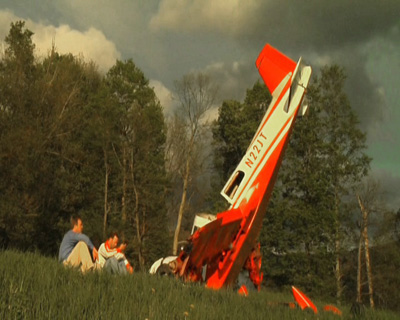
Guy Ben-Ner Name Dropping 20 April - 27 May 2011 Private View: Wednesday 20th April, 6-8 pm In Guy Ben-Ner�s early works, the Israeli artist used his children and wife as actors in stories adapted from major literary works: Robinson Crusoe, Moby-Dick, and Jean Marc Gaspard Itard�s early 19th-century account of the Wild Boy of Aveyron, France. Using his family�s apartment as a stage set, and the materials available to resourceful ends, Ben-Ner wittily dissolved the boundaries between his studio practice, his domestic life, the everyday and imagined world. The two film works being shown in Name Dropping were made in the wake of Ben-Ner�s divorce and demonstrate not only a change in his approach to making art, but also a transition in his own life. This transition clearly takes place in Drop the Monkey, a video contextualized by his divorce and the problems of starting a new relationship. The piece was made shot-by-shot (that is, without editing) during plane trips between Israel and Berlin, where Ben-Ner�s then-girlfriend lived. A PERFORMA 09 commission, the video piece openly questions the ethics of art-making, and where the divide should be drawn between art and personal relations. In If Only It Was as Easy to Banish Hunger by Rubbing the Belly as It Is to Masturbate, shot in Western Massachusetts, Ben-Ner travels by airplane, car, and bicycle while quoting extracts from literature about travel, including Eighty Days Around the World. The result is a response to the artist�s sense of displacement, and the apprehension that accompanies loss, transition, and change. Ben-Ner�s preoccupation with travel and dislocation seen in these films can be traced to earlier workElia: The Story of an Ostrich, a story of wandering�the flightless bird, which is nothing but legs. Ben-Ner recognises that: �For quite a while I have been dealing with home and homelessness in my work, both personally and politically, but I think it has taken on a biographical edge in the last years that has sharpened it. I returned to Israel for family reasons a bit more than a year ago; I was not feeling at home there anymore, but at the same time I was not feeling at home anywhere else. I came to accept that feeling as a positive one. Feeling not at home everywhere. In a way, the last movies respond to a feeling of homelessness. The dialogue in If Only� mentions this, but it is especially present in Drop the Monkey, where its making was driving me crazy but was also calming me down, as if�bouncing back and forth like a tennis ball�I didn�t belong anywhere else but on an airplane. An airport, maybe�. Guy Ben-Ner was born in Ramat Gan, Israel, and studied at Columbia University, New York. In 2005 he represented Israel at the Venice Biennale, exhibiting the film and sculpture Tree House Kit. Since then he has been the recipient of a DAAD scholarship, enabling him to work and study in Berlin, and he produced new work for the sculpture projects m�nster 07, curated by Kasper K�nig, Brigitte Franzen and Carina Plath. In 2008 his work was included in the Shanghai Biennale and the Liverpool Biennial. Name Dropping is Guy Ben-Ner�s second solo exhibition at Gimpel Fils and coincides with his solo show at Site Gallery, Sheffield. Photography since 1970 20 April - 27 May 2011 Private View: Wednesday 20th April, 6-8 pm This group exhibition includes works of art made since the early 1970s in order to consider different types of photographic practice. Experiments with photomontage, the close-cropped frame, light and the documentary are all represented here. All of the artists included in this exhibition have had solo exhibitions at Gimpel Fils and we are pleased to be able to take a retrospective look at their work. The small works on display by John Duncan depict the meeting halls of the Orange Order, the majority of which are in rural locations known to few outsiders. With roots in agrarian secret societies The Order was established in the Eighteenth Century to affirm the principals of the Protestant Reformation and to this end its members are amongst the staunchest defenders of the monarchy and the constitution. Duncan reflects on the defensive architecture of these isolated outposts and what they might reveal about The Orders current relationship to wider society. Until her untimely death in 1997, Andrea Fisher concentrated on the apparent factual status of disaster imagery and the hidden, psychic significance for the viewer. Reframing, zooming, and cropping images of traumatized women, focusing on scars and scratches, her works disclose more intimate truths about violence for those willing to look. She identified that her �work is about our deeply ambivalent relationship to suffering � our desire to know of it, to know it in ourselves, and our simultaneous capacity for concealing, repressing and forgetting�. Story telling is central to Susan Hiller�s work and she investigates the qualities of her chosen medium, always seeking the most appropriate method for communicating a particular message. The photographic series The Secret of Sunset Beach, show overlooked details from an exotic Californian interior, onto which Hiller has added her own calligraphic inscriptions using light: projected light, sunlight, and shadows interweave with each other inside a fantasy space to convey a sense of energy and mystery. Peter Kennard�s photomontages from the 1970s and early �80s were made with a hope that audiences would think critically about the daily barrage of images that we are subjected to. He sought to rip apart the smooth, apparently seamless, surface of official deceit found in governmental policy and biased media reporting. The photomontages on display here clearly show their method of construction: the seam is visible to those willing to look for it, and as such demonstrate how images and ideologies are constructed. Since 1995 Muntadas has created a body of work entitled On Translation, which considers the nearness of elsewhere in an increasingly globalised world. His projects explore the problems of communication, the slipperiness of translation and complexities of interpretation, within international settings. A photographic image depicting a queue of people reflects on the social protocols and rituals in which we all participate. Looking at lines of people in airports, post offices, and museums, we are encouraged to notice how we subscribe to systems of order and control, often unconsciously. Christopher Stewart's photographs of security training grounds suggest the presence of others watching us, pointing to the activity of surveillance and the power relations between the watched and the watcher. In his intimate portraits of sleeping men, power relations seem to have shifted; these security guards are presented as potentially vulnerable, although there is always the possibility that they are sleeping with one eye open. For further information please contact [email protected] Tel: +44 (0)20 7493 2488 Gallery hours: Mon - Fri 10am - 5.30pm, Sat 11am - 4pm |
||||
re-title.com
International contemporary art
SIGN UP FOR NEWSLETTERS

 SIGN UP for ARTIST MEMBERSHIP
SIGN UP for GALLERY MEMBERSHIP
SIGN UP for ARTIST MEMBERSHIP
SIGN UP for GALLERY MEMBERSHIP
Click on the map to search the directory